Robert Johnson
| DANCING
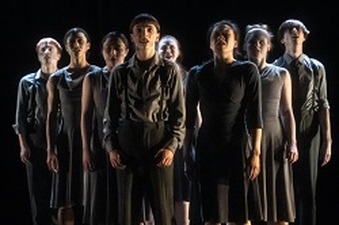
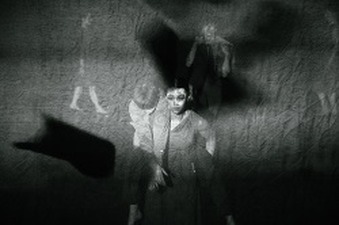
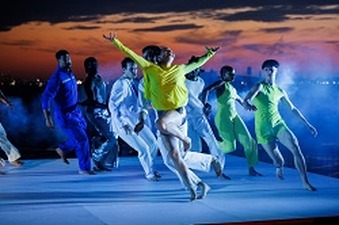
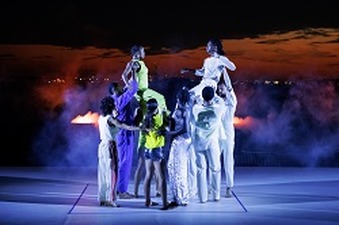
WITH TERRORISM, PART ONE Spectrum Dance Theater in “Occurrence #14” Bill T. Jones/Arnie Zane Company in “Curriculum IV: Spin and Spin! Turn! Turn! Turn!” Twenty-five years after hijacked airplanes slammed into the World Trade Center and the Pentagon unchaining the dogs of war, we seem no closer than ever to agreeing about what happened on September 11, 2001. What we have acquired, if not certitude, is a catalog of dances created in response to the event. Perhaps choreography, more than any other art, is able to reflect the grief and visceral disquiet of a populace whose government has betrayed its confidence. Watching dancers embody our emotions, we seek catharsis and a balm for psychic wounds. Yet just as we cannot agree about what happened that day (surprise attack or false flag?), our artists cannot agree how to portray it. An event demanding its Guernica rattled an arts community long habituated to abstraction and postmodern games. Tragedy was out of fashion. For months, however, the poisonous odor of burnt plastic and the dust of our fellow citizens could not be avoided. They crept under the door and passed through walls, finding chinks in the most heavily armored minds. Posters of the “missing” plastered the streets. This season, works by choreographers Donald Byrd and Bill T. Jones joined the list of pieces commemorating the attack that darkened our horizons. Also marking the anniversary, Vangeline Theater returned to Times Square with “Unforgotten: Butoh for 9/11,” a ceremony of remembrance; and Jacqulyn Buglisi revived her “Table of Silence Project,” an annual ritual of healing on Lincoln Center Plaza. Attempting to reclaim our public spaces and dispel the fears that haunt us are among these artists’ ongoing concerns.
Donald Byrd does not mind making audiences uncomfortable, and a recurring nightmare pursues us in his multi-media work “Occurrence #14,” which Spectrum Dance Theater performed in the Downstairs Theater at La MaMa, April 9-12. At the outset, we hear the choreographer recalling his experience on the morning of the tragedy, as he watches grisly scenes broadcast on television. What appears to be debris falling from the Twin Towers turns out to be a human being plummeting down the side of a skyscraper, limp as a rag doll. Byrd says he can see office workers clasp hands and jump into the void, surrendering to the plunge without struggling. How many times did we all stare at those images, until they scarred our minds? Byrd forces us to watch over and over again, repeatedly projecting on a scrim the video of a falling body. We hear the deafening roar of jet engines, and an onlooker screams. Behind the scrim, the dancing is tense and dodgy. Birdy Adler sits alone, knees clutched, staring open-mouthed. The dial on the TV doesn’t seem to work, making it impossible to change the channel. Seizing an invisible steering wheel, this frantic observer veers off course---like the hijacked planes; like the family whose life will never be the same; like a whole nation suddenly forced off the road. Adler kisses an invisible partner goodbye; and draws the outline of a tower in the air. The dancer’s hand flutters softly downward like the shower of office paper that some passers-by mistook for confetti. As we imagine falling, lightness fills the hollow of our stomach. The ensemble amplifies these themes in dancing of somber formality. Knitted together or spread apart in a statuesque group, they replay the moment before an explosion shatters the peace. They may connect gently with duet partners occupying different levels, or they may behave compulsively unable to stop slapping themselves. Abstract, linear figures alternate with narrative gestures pointing to disaster. Serene Wong dances an elastic solo filled with anguish. As the dance becomes more desperate, people with ashen faces and dust-begrimed clothing run in place. Pounding the floor, blind with terror, they attempt to flee. A group fall flat and lie immobile, as if thousands of tons of concrete pinned them to the ground. Even in stillness we feel their intensity. The dancers carry one another, and wearily set the bodies down. A haze of atmospheric particles rains down on the scrim. Lights dye the stage red, and adopting a pose with one palm raised the survivors attempt to shut out unbearable thoughts. Yet 9/11 continues to haunt us.
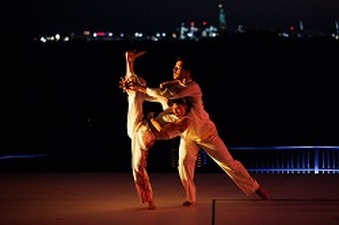
In contrast to this wrenching experience, Bill T. Jones’ “Curriculum IV: Spin and Spin! Turn! Turn! Turn!” soothes like a lullaby. On an outdoor stage in Wagner Park, on September 10, the performance has New York Harbor as a backdrop with Liberty lifting her torch in the distance. Upstage, cinder barrels emit clouds of lurid, orange smoke. These containers remind us of burning skyscrapers and of oil barrels from the Middle East. They are our national dumpster fire. In contrast to these allusive props, however, the dancing in the foreground is clean and self-contained, sprightly and often tender, existing at a cool remove from human suffering and the brutality of war. Jones’ composition, choreographed with Shayla-Vie Jenkins and the company, unfurls in a lovely and ever-varied panorama of movement. Beginning off-stage, an episode of semaphoric gesturing seems to deconstruct the hand-on-heart ritual of the Pledge of Allegiance, while we hear Gertrude Stein read her chirpy “Portrait of Picasso” (“would he like it would Napoleon…”). The gang then makes a rush for the platform, the first of many bustling entrances and exits in which the cast returns to gather up and exchange soloists, often elevating them in lifts. “Curriculum IV” toggles back and forth between images of a crowd rushing to the rescue, and moments of intimate communion. Hannah Seiden’s opening solo defies expectations, seeming quirky and irreverent. Skipping, sliding, and wagging her butt, she purses her lips anticipating a kiss, and she sticks out her tongue. Does the mood turn ominous, when she stops to point to the sky?
Camille Phelps and Ryan Charles-Marc offer the first of several inventive duets. He gently takes her on his lap, and his arms encircle her. They make symmetrical figures, and she kneels on his back. Now we hear the celebrated verses from Ecclesiastes’ “There Is a Time,” rooting this encounter in the recurring seasons of life. When the ensemble returns, they lift these duet partners in a seated position, like the bride and groom at a Jewish wedding. Jones’s dancers are all striking individuals, and when the choreographer plays matchmaker, “Curriculum IV” becomes a metaphor for our diverse society and the endless possibilities of romantic attraction. Barrington Hinds and Babou Sanneh tackle each other, and abandon themselves in slow, upside-down lifts. Justin Rainey gallantly pairs with feisty Rosa Allegra Wolf. They catch each other, pull away, and come together in a tight clinch. When Sanneh returns to partner Mak Thornquest, their dancing has a wistful, dreamlike quality. The dance’s varying dynamics, with sudden bursts of energy, maintain visual interest from start to finish. Samora Pinderhughes’ score, with portions sung by musicians who invade the space, incorporates hymns, folk songs, and jazz standards. Even Liz Prince’s costumes contribute to the liveliness of the spectacle, as the color palette changes when the dancers shed one article of clothing, and don another.
Into this vibrant scene, however, a grim recollection insinuates itself. Threaded into the sound-score, witnesses calmly recall their experiences on 9/11 and reflect on the idea of heroism. Their testimony lends special meaning to the love song “I’ll Never Be the Same.” At one point, two unseen characters discuss the possibility that they might have to leave. “I’ll fall apart anyplace else,” one says. “Where do you want to go?” the other asks. In “Curriculum IV,” the dance’s formal beauty appears more important than accountability. Life goes on. Yet this blithe postmodern interlude may be more fragile than we think. Perhaps we had better ask the hard questions, while we’re still around. |